Author name: muzafartp28@gmail.com

expert digital marketer
Uncategorized

THE DARK SIDE OF DIGITAL MARKETING

1. The Illusion of Instant Success Success appears effortless on social media. You witness companies expanding quickly, brands becoming viral, and creators amassing thousands of fans overnight. What you don’t see: This leads to irrational expectations, particularly for novices. Many people give up too soon because they think they’re “not good enough,” but they haven’t seen the whole picture. 2. Data Overload & Decision Paralysis Data plays a major role in digital marketing. That has a drawback even though it’s powerful. Marketers deal with the following issues all the time: Confusion rather than clarity can result from an abundance of data. Marketers frequently overanalyze every statistic and hesitate to take action rather than making confident decisions. Making smarter decisions doesn’t always follow from having more facts. 3. The Pressure to Always Be “Online” Digital marketing is always on the go. It is expected of brands to: Post often : Burnout results from this ongoing obligation to be online, particularly for independent contractors and lone marketers. The truth?Although being present all the time is draining, consistency is crucial. 4. Algorithm Dependency Over-reliance on platforms is one of the biggest dangers in digital marketing. Algorithms determine your exposure, reach, and interaction, and they are constantly evolving. Today: For companies that rely solely on one platform, this lack of control can be dangerous and annoying. 5. Ethical Concerns & Manipulation Not all advertising is truthful. Certain tactics are unethical, like: Although these strategies could yield immediate benefits, they ultimately undermine trust. Because digital marketing has the ability to change behavior, it carries some responsibility. 6. The Hidden Cost of “Free” Traffic Organic growth is frequently marketed as “free.” However, in practice, it costs: It takes a full-time job to create content every day, optimize for search engines, and interact with people. Many people undervalue this and become burned out attempting to grow naturally without a defined plan. 7. Fake Metrics & Vanity Numbers Success isn’t always genuine. Many companies concentrate on: However, these are frequently vanity metrics; while they appear excellent, they don’t always result in actual influence or income. A page with 1,000 devoted clients is more valuable than one with 10,000 followers but no engagement or sales. 8. Increasing Competition There are advantages and disadvantages to the increased accessibility of digital marketing. The drawback? What was effective a few years ago might not be effective now. To be relevant, marketers need to change all the time. 9. Client Expectations vs Reality This is a significant problem for agencies and independent contractors. Customers frequently anticipate: However, digital marketing is a long-term strategy. Controlling expectations becomes as crucial as managing campaigns. 10. Mental Burnout & Creative Fatigue Digital marketing relies heavily on creativity, but it is not limitless. Continually considering: can result in creative fatigue. Marketing may be more stressful than fun due to the need to constantly be “innovative.”
Uncategorized

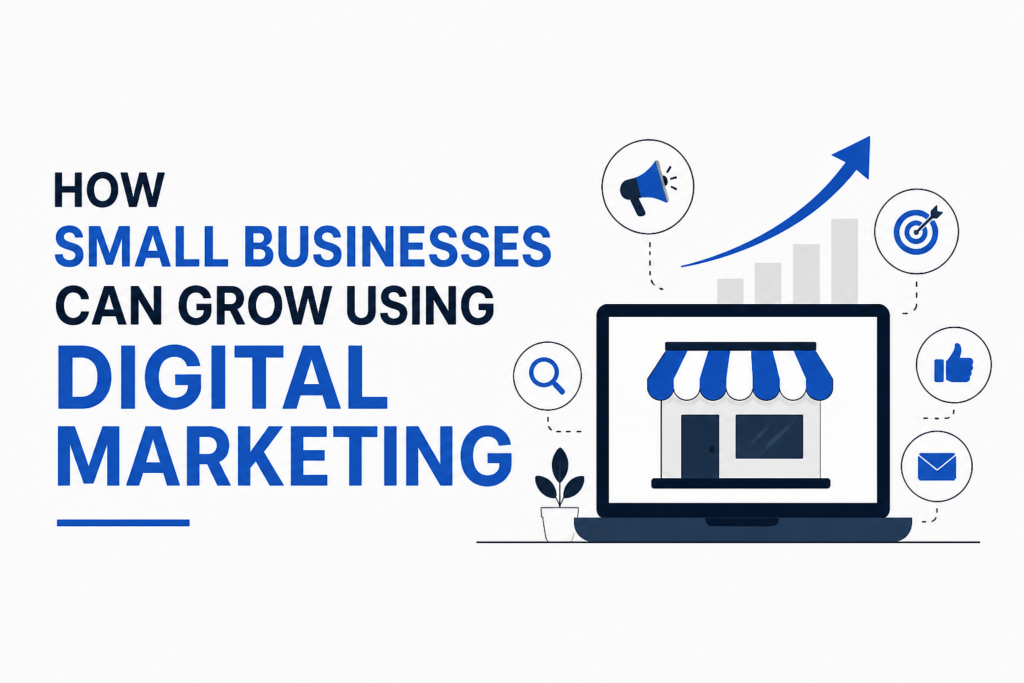
HOW SMALL BUSINESSES CAN GROW USING DIGITAL MARKETING

Small businesses now have more chances to compete with larger corporations because to digital marketing. Even companies with tight finances can expand their clientele and reach a wide audience with the correct tactics. For small businesses, building a polished website that explains their goods or services in detail is the first step. A well-designed website increases the company’s credibility and facilitates clients’ learning about it. Another crucial tactic is search engine optimization. When prospective clients seek for similar services, small companies can show up in search results by optimizing website content with pertinent keywords. Social networking sites are also crucial to the expansion of businesses. Small businesses may establish a solid rapport with their audience by consistently publishing interesting material and communicating with followers. Content marketing, which is disseminating beneficial blogs, videos, or manuals that offer customers value, is another successful strategy. This establishes the company as an authority in its industry and fosters trust. All things considered, digital marketing enables small firms to reach the appropriate audience, raise brand awareness, and produce more leads without having to invest a lot of money.

Uncategorized

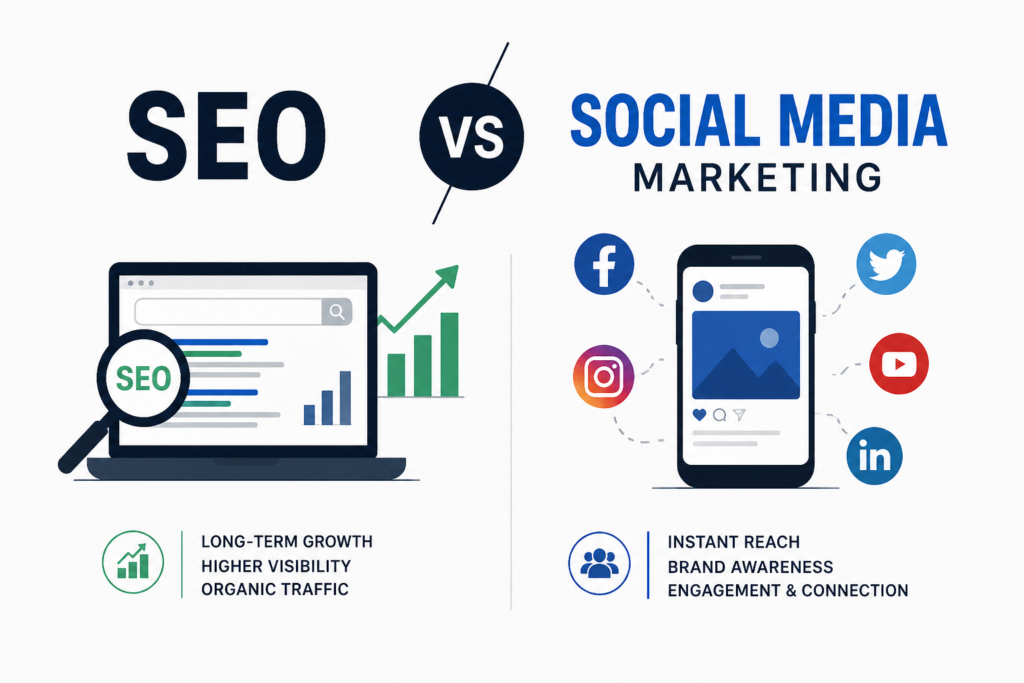
SEO VS SOCIAL MEDIA MARKETING

Although they have different goals, social media marketing and search engine optimization (SEO) are both effective digital marketing techniques. Businesses can choose which is better for their marketing objectives by being aware of their differences. Enhancing a website’s exposure on search engines like Google is the main goal of SEO. Businesses may increase their search engine ranking and draw in organic visitors by optimizing their website’s technical structure, content, and keywords. The fact that SEO produces long-term outcomes is one of its main benefits. A website doesn’t need to pay for continuous advertising once it has a high ranking. In contrast, social media marketing concentrates on advertising businesses on sites like Facebook, Instagram, and LinkedIn. It facilitates direct audience engagement, brand exposure, and rapid product promotion for enterprises. Additionally, social media works well for contacting particular demographics and conducting customized ads. For the majority of firms, adopting both tactics rather than picking one is the optimal course of action. While social media increases brand connection and instant visibility, SEO contributes to long-term organic traffic. When used together, SEO and social media marketing create a strong digital presence that supports sustainable business growth.

Uncategorized

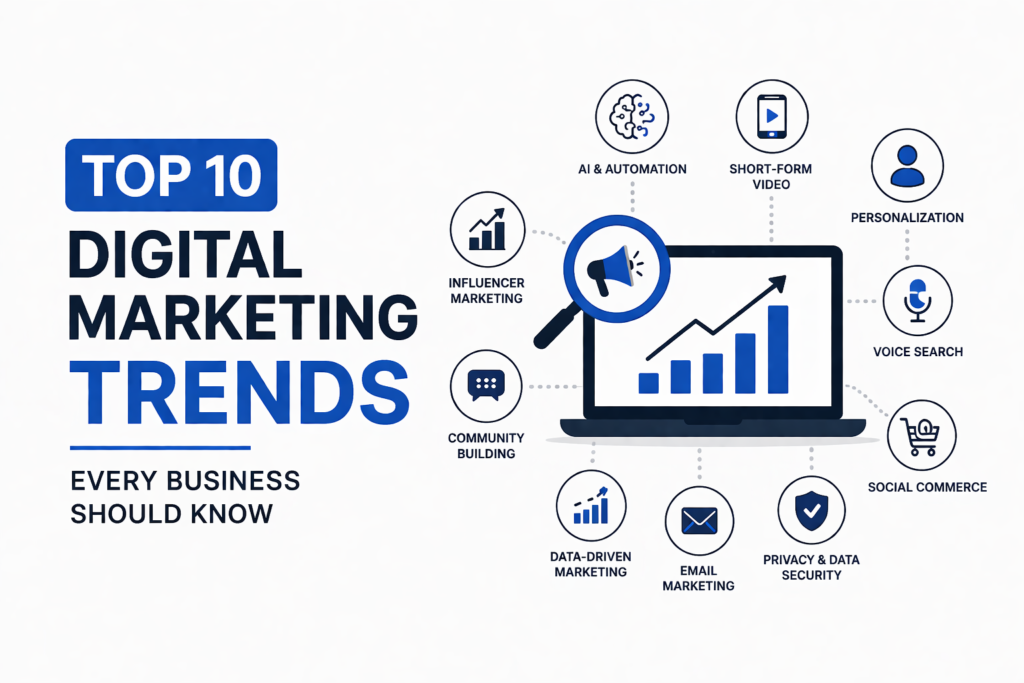
TOP 10 DIGITAL MARKETING TRENDS EVERY BUSINESS SHOULD KNOW

Social media marketing, on the other hand, focuses on promoting companies on websites like Facebook, Instagram, and LinkedIn. For businesses, it enables quick product marketing, brand visibility, and direct audience involvement. Social media is also a good way to reach specific audiences and run tailored advertisements. The best course of action for most businesses is to use both strategies rather than just one. While SEO helps generate long-term organic traffic, social media boosts brand connection and immediate visibility. Personalized marketing, interactive content, mobile-first marketing, privacy-focused advertising, and data-driven decision making are some other significant trends. Additionally, businesses are spending more on content marketing, concentrating on blogs, videos, and instructional content that fosters audience trust. Businesses may enhance their online presence, draw in more clients, and experience long-term success by keeping up with these trends in digital marketing.

Uncategorized

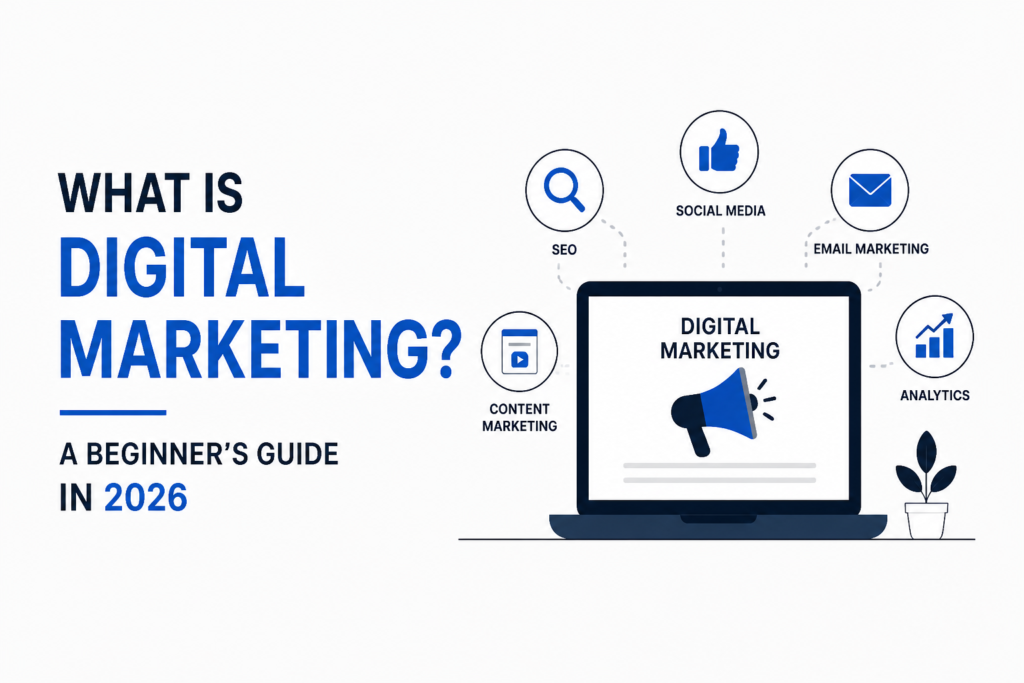
What is Digital Marketing? A Beginner’s Guide in 2026

The process of promoting goods and services through online channels and digital technologies is known as digital marketing. Digital marketing concentrates on reaching audiences via the internet, in contrast to conventional marketing strategies like newspapers or television commercials. To reach potential clients, businesses employ websites, search engines, social media platforms, email, and online ads. Digital marketing has emerged as one of the most effective strategies for business expansion in 2026. Businesses may now more precisely target the correct audience thanks to the billions of people who use the internet every day. Businesses may monitor outcomes, examine consumer behavior, and make real-time strategy improvements using digital marketing. Search Engine Optimization (SEO), Social Media Marketing, Content Marketing, Email Marketing, and Paid Advertising are some of the primary forms of digital marketing. Each of these tactics aids companies in drawing in customers, increasing brand recognition, and turning prospective clients into devoted patrons. Building a solid online presence is the greatest method for novices to get started with digital marketing. This include creating a polished website, keeping up-to-date social media profiles, and creating insightful material that addresses client issues. To put it simply, digital marketing is about developing relationships with clients and offering value through digital channels rather than merely selling goods online.

Scroll to Top